
This post may contain affiliate links. I earn commission if you purchase via affiliate links. As an Amazon Associate, I earn from qualifying purchases. Please see our full Disclosure Policy for details.

Stir Up Sunday is a much-loved tradition that encourages us to make our Christmas puddings, cakes and festive make-ahead bakes. It’s a day that blends practicality with a touch of heritage, old-fashioned charm, and a bit of fun!

The History of Stir Up Sunday
Originally nothing to do with food, Stir Up Sunday was a nickname for the last Sunday before Advent began. Advent is the four weeks before Christmas, an important time in the Christian calendar, when believers like me are encouraged to spiritually prepare for Christmas.
There is special prayer used during the services held on that last Sunday before Advent which has been in use since the 1500’s.
“Stir up, we beseech thee, O Lord, the wills of thy faithful people; that they, plenteously bringing forth the fruit of good works, may of Thee be plenteously rewarded, through Jesus Christ our Lord’’.
You can see where this is going! We are not sure exactly when, but at some point this prayer lead to the last Sunday in Advent being nicknamed “Stir Up Sunday”.
Christmas Pudding and Stir Up Sunday
We also know that some time during the 1700’s Plum Puddings began to be associated with Christmas – and then in the 1800’s, the Victorians neatly combined the two. You see, a good plum pudding (more often called Christmas pudding in modern days) needs about four weeks to mellow so the flavours deepen. And ‘Stir Up Sunday’ made for an excellent play on words because, as anyone who has made one will tell you, Christmas pudding needs a lot of stirring.
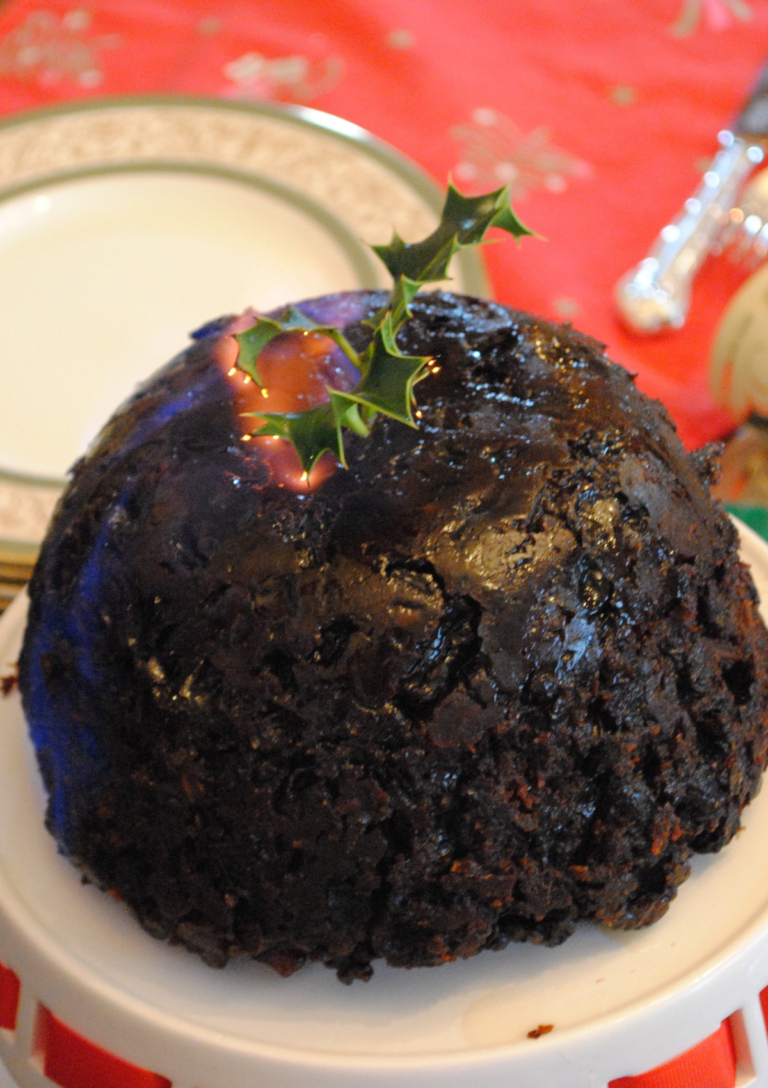
Charles Dickens writes about Plum Puddings in A Christmas Carol. Unlike the lighter puddings I enjoyed growing up in Canada, the traditional Christmas Pudding Dickens wrote about is more like a heavy cake, full of dried fruit and flavoured with brandy or stout (a very dark beer). Many Christmas Pudding recipes have been in families for generations, just like our family recipe pictured below.

Making The Christmas Pudding
The Christmas Pudding also needs to be steamed for between 6 and 8 hours, depending on the recipe, although some more modern recipes take a bit less time. Our Victorian Christmas Pudding recipe takes about 8 hours to steam, so doing it on Stir Up Sunday might be a good idea.
After the pudding is steamed it is then cooled, wrapped in cheesecloth or grease proof paper and then foil and stored in a cool place (not the fridge). On Christmas Day the pudding is then steamed again, but generally only for a couple of hours.
Stir Up Sunday Traditions
Make a Wish
Traditionally, each member of the family takes a turn to stir the pudding mixture. Generally the youngest child stirs the pudding first, and then the turns move on in order of age. When it’s your turn, you make a wish. The wish is to be kept secret, a bit like the one you make when you blow out your birthday candles.
Now Christmas pudding requires a lot of stirring, so I’m assuming a clever cook came up with this idea one day when their arms were getting a bit sore from the effort of having to do it all by themselves!
Christmas Charms
In years gone by, before we realised that putting inedible items in food was a choking hazard, charms were hidden in Christmas puddings before they were steamed. From sixpences to thimbles, everything had a meaning and was meant to tell a fortune.
If you found a sixpence in your serving of pudding you were going be rich. A thimble indicated you would remain unmarried and, conversely, a ring meant you would be married within the year. Other people would wrap a pound coin in waxed or greaseproof paper and put it in the pudding batter before it was steamed. The person who found the pound coin was meant to be lucky all year.
As lovely as this idea sounds, it is not practiced these days and I would not suggest doing it. Hidden charms can be a choking risk, and they can also introduce germs into the pudding, so are not especially hygienic either!
Variations on a Theme
Of course, not everyone makes a Christmas pudding on Stir Up Sunday. These days people often make other desserts that require a bit of time for the flavours to mellow or that can be made ahead and frozen.
It’s the perfect time to make a delicious Christmas Cake. The cake can then be ‘fed’ every week or so with a bit of holiday spirit (generally brandy or rum) before it is covered in marzipan and iced or frosted closer to when it is going to be served.
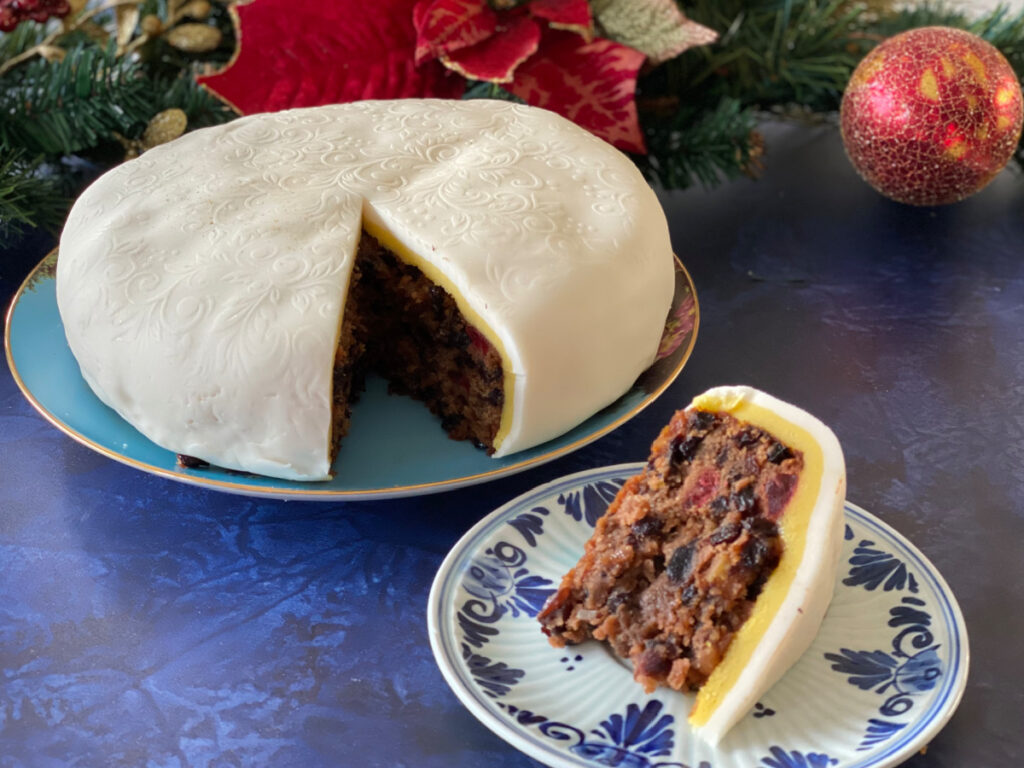
I make a traditional British Christmas Cake, also from a family recipe that dates back four generations just like our Christmas pudding.

Recently, I developed a Gluten-Free Traditional British Christmas Cake as well. It has been very popular! And of course, there’s no reason why you can’t make a start on other festive treats, like homemade mincemeat, chutneys or make-ahead slice and bake cookies like these very popular Cherry Christmas Cookies.

Begin Your Festive Baking When You Are Reading
Despite everything I have just said, please don’t feel you need to start your Christmas baking weeks in advance. In the past, I have made a Christmas pudding only a couple of weeks before the big day and it was wonderful. Extra time simply allows the flavours to mellow, and a fruit cake will always appreciate a gentle feeding of brandy as it rests, but you can still bake something special whenever you are ready.
At its heart, Stir Up Sunday is less about timing and more about the gentle pleasure of preparing something comforting and delicious for the festive days ahead. Whether you make your puddings or cakes weeks in advance or closer to Christmas, the act of stirring, baking and setting things aside for a future celebration can feel really grounding. Either way, Stir Up Sunday is a tradition you can shape to suit your own home, life and style.
More Posts About British Food and Celebration
Traditional British Christmas Cake



What a treat April! I love family recipes and this Christmas pudding sounds fantastic. I will have to use butter instead of suet. In Congo where I reside, I won’t be able to find it ! Thank you for sharing April
Thank you so much, Hadia! I hope you enjoy the recipe!
I love learning about the history of special foods like this! Thank you so much for sharing!
I’m so glad you enjoyed learning about our British Christmas Puddings, Brandi! Thank you for visiting 🙂
Oh wow…I’ve never heard of such a thing!
Thanks for joining Cooking and Crafting with J & J. Happy Thanksgiving!
Yep, it’s been around for centuries over here across the pond. We have some fun – and funny – traditions 🙂 Happy Thanksgiving to you too, Jess!
That is such an interesting read! I have never heard of stir up Sunday before. Thanks so much for sharing this. I love learning about traditions like this.
I’m so glad you enjoyed it, Audrey 🙂
I have never heard of this!! Such a neat tradition. (I love bread pudding!)
It really is a fun tradition, Jacqui 🙂 Bread pudding is slightly different than Christmas pudding (secretly I think I prefer bread pudding!) but both are lovely 🙂
That’s intersting about the history of the charms. We are doing advent this year at our church.
Thank you, Rosey. I love Advent – it is such a lovely time of year 🙂
I have never had a pudding like that. I looks very moist and chocolatey which is right up my alley.
It is a very different pudding, Val, but we love it over here 🙂 It is definitely moist that is for sure!
I’m afraid I always buy a Christmas pudding even though I am English and here in the UK! Proper traditional Christmas pudding is delicious though and although we only have it once a year I do look forward to it.
My friend always makes her Christmas cakes on Stir up Sunday, she puts Christmas music on and everything then the cakes are fed brandy every week between now and Christmas. She makes one for every family group in her family (if that makes sense)
I’ve been known to buy Christmas Pudding too, Julie 🙂 Some years it’s just too busy to invest so much time in making one, but I always enjoy it when I do. It’s lovely that your friend has that tradition every year – and what a nice thing to do for her family groups 🙂 Hope you are having a lovely weekend.
Thank you for telling me about Stir up Sunday. Mum used to make Christmas Puddings with threepence or sixpence in it. I am showing my age now hahaha. We went decimal in 1966 I think. Lovely tradition if you have the time. Chris is from England and followed the tradition even when he immigrated to Australia in 1980. I love UK traditions. Such a lovely post and blog…. thank you. May you and your family have a blessed and happy Christmas and New Year.
Thank you so much, Glenys! I am so glad you enjoyed the post, and thank you for the wonderful, encouraging comment. May you and your family have a very Happy Christmas and New Year full of blessings too.
How interesting! I never heard of Stir Up Sunday. I like to learn about different traditions.
My Irish-born sister-in-law always made a plum pudding for Christmas as well a sa trifle — I loved both!
I’m so glad you enjoyed the piece, Pat! I do love a trifle – perhaps even more than Christmas pudding! 😉
I’ve never heard of Stir Up Sunday, but I love the idea. I really love making things ahead of time and freezing them (such as gingerbread cookies) because it makes the holiday itself more relaxing. The fondant on your traditional cake is beautiful! 🙂 What wonderful traditions.
Thank you so much, Jennifer! I was so excited when I found the rolling pin with the indentations in it so I could make the pattern in the icing. I agree, it’s so nice to get ahead. It helps me enjoy the both the preparations and the celebrations even more!