
This post may contain affiliate links. I earn commission if you purchase via affiliate links. As an Amazon Associate, I earn from qualifying purchases. Please see our full Disclosure Policy for details.

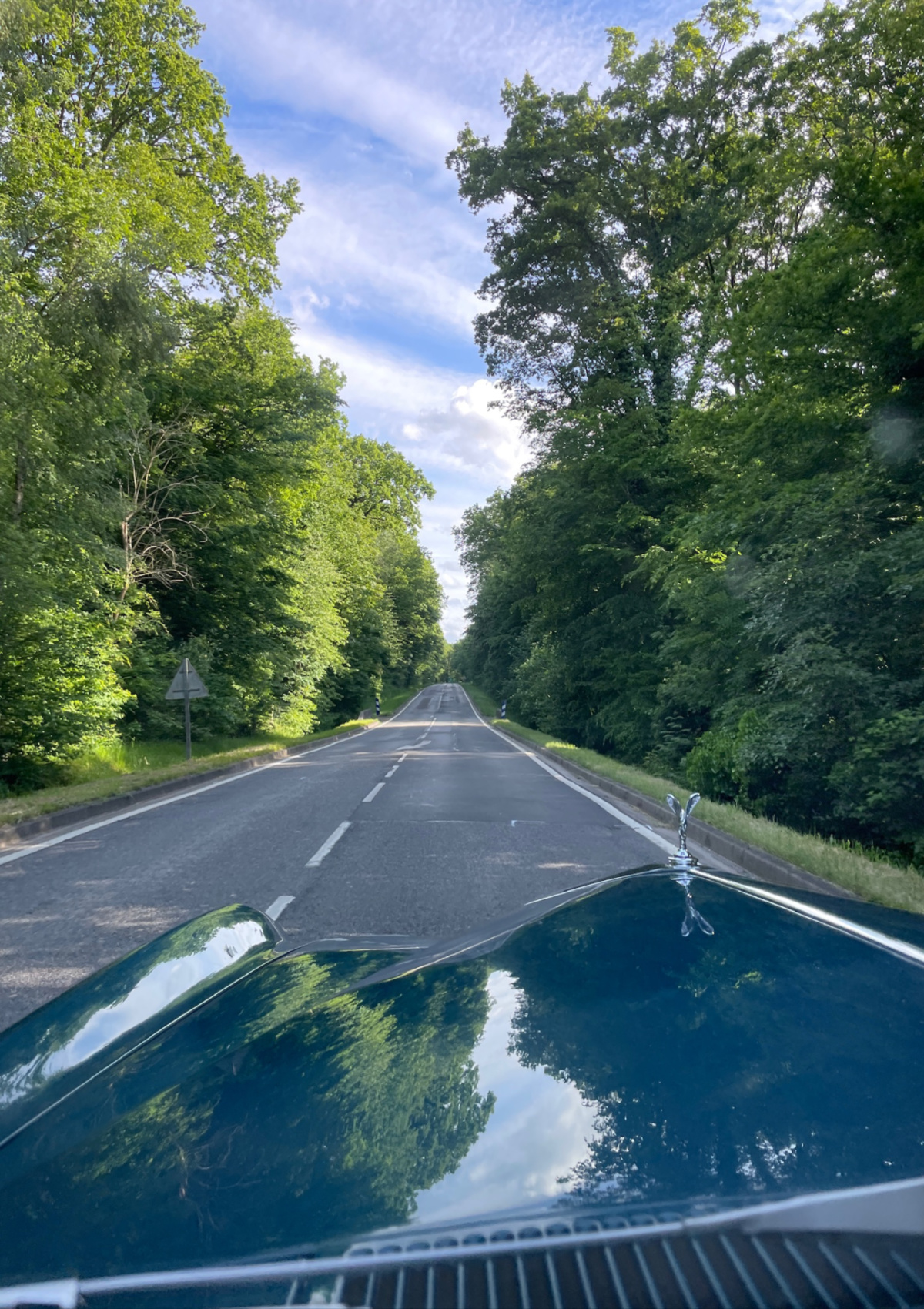
A Loire Valley road trip is a wonderful way to discover all the interesting things in this beautiful area in northern France, famous for its scenery, châteaux, medieval towns and wineries. We covered over 1500 miles in just seven days on our most recent journey and I have lots of Loire Valley travel tips to help make the most of your visit too.
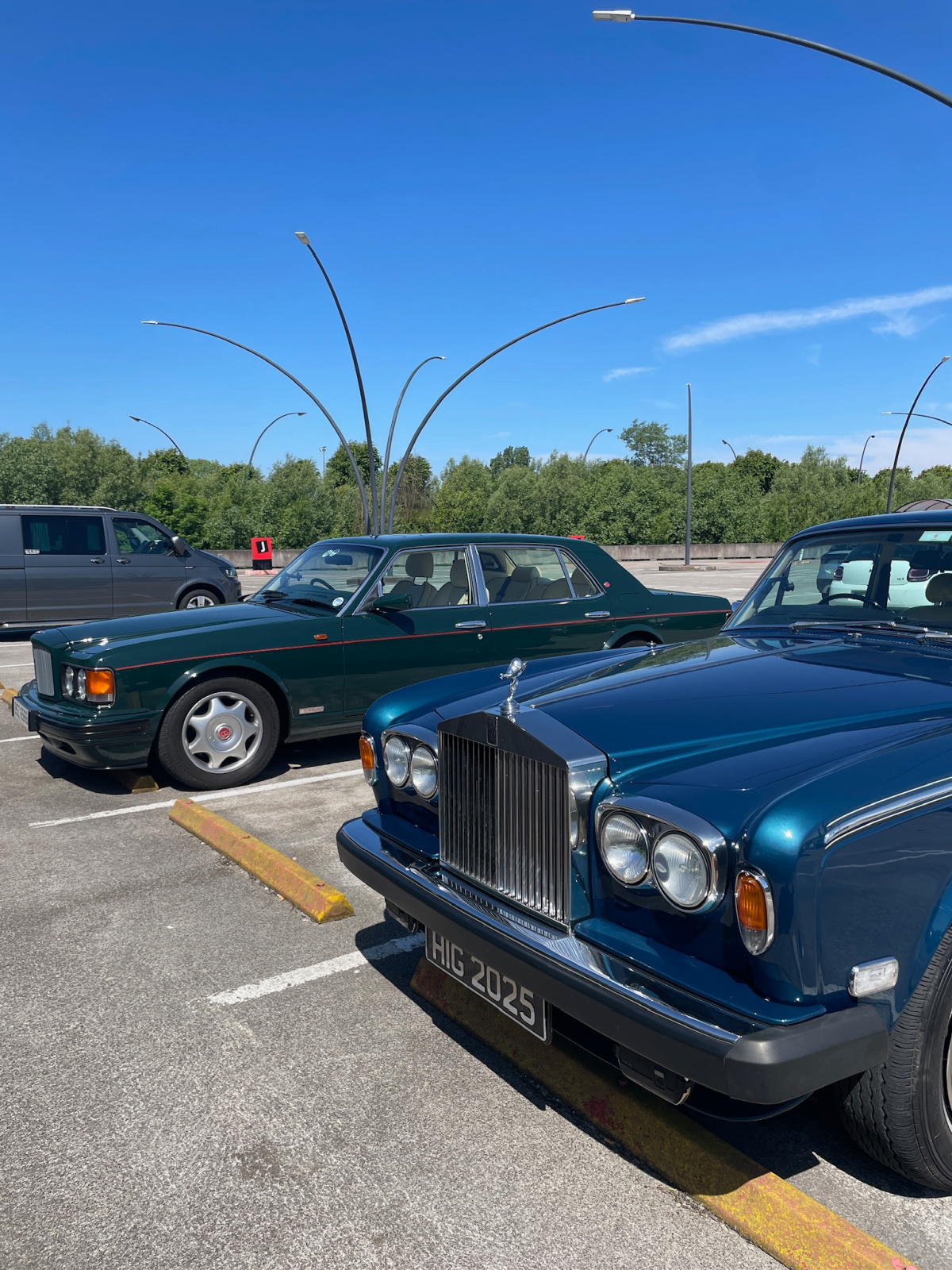
My husband Guy and I set off for the Eurotunnel at Folkestone in our 1996 Bentley Turbo R very early one sunny spring morning, joined by our son Alexander and his partner Hannah, who travelled in our 1977 Rolls-Royce Silver Shadow 2. While more modern cars might have been a more practical choice for our Loire Valley road trip, we love adventures in our vintage vehicles. They certainly are comfortable to travel in, offering ample space for luggage – handy when you are thinking of taking the opportunity to bring home some delicious wines from the region, home to some of France’s finest vineyards.
Travelling from the UK to France by Car
Le Shuttle, the train for vehicles and passengers that runs through the Eurotunnel under the English Channel, is my favourite way to travel to Europe by car. You can be in France in around half an hour. There is also a wide choice of ferries departing from various locations but the journey time is longer and there is always the risk of rough seas in the English Channel. Portsmouth would likely be the best ferry departure point for a Loire Valley road trip but this depends on exactly what you want to see, so check before you travel.
Always check current motoring regulations in France before you go. As a start, French law requires you to have headlamp converters, warning triangles and a high-vis jacket for everyone travelling in the car (affiliate links). Check if you require an international driver’s license to allow you to drive in France, and confirm with your insurance company that you are covered for driving your car in Europe. And of course, be sure your car is serviced and in good running condition.
The French drive on the right hand side of the road. There are fees for using many French roads, payable at automated toll booths, so be sure you have a credit card available. Bear in mind that if you are driving a right-hand drive car, it is hardy to have a passenger as the toll booths are on the left hand side.
Loire Valley Travel Tip – If you are not UK based, or you do not want to take your own vehicle across the channel, there are several airports in the Loire Valley. Depending on your location and the time of year, there are flights available to Tours, Nantes, and other smaller airport. You can arrange to rent a car for your Loire Valley road trip when you arrive; the larger airports have car rental outlets onsite or nearby. Be sure to book car rental/hire in advance.
Eurotunnel
When travelling to the continent by car, be sure to allow time for queuing for Le Shuttle. If your budget allows, I recommend Flexitickets, which offer dedicated check in lanes and the option to travel on the next available train whenever you arrive, regardless of your booking time. It makes for a much more relaxed journey, and with a visitor lounge after check in offering sandwiches, drinks and snacks (all included in the price of your ticket) it helps the journey go more smoothly. Unlike on a ferry where cars are left below decks, you stay with your car on Eurotunnel, so you can have a little picnic in your car en route if you like. The train journey takes about half an hour.
Loire Valley Road Trip – Day One
We arrived in Calais at about 11am (Europe is an hour ahead of the UK), and after a quick pause at a nearby rest stop, started off on our journey. There are plenty of routes you can take on your Loire Valley road trip, depending on the places you would most like to visit.
Our route on that first day took us slightly out of our way so we could travel via Amiens, where my Grandfather was wounded in World War 1, and also Écoivres, a tiny village in the department of Pas-de-Calais, home to the final resting place of his step-father, who was killed in the same war. If you travel the same way, do not miss the striking view of the two ruined towers of the Abbey of Mont-Sainte-Eloi on the hill as you drive through Arras. Destroyed during the fighting, they are a poignant reminder of the devastation caused by the two great wars. And although visiting a cemetery might not be something you choose to do on holiday, the military cemetery at Écoivres is a fascinating place to visit. I felt privileged to be see the final resting place of a member of my family, moved by the sight of graves from all sides of the conflict and the sacrifice they represent, and so grateful to the villagers who have taken loving care of this sacred place for over a hundred years.
After our stop in Écoivres, we carried on to the Canadian National Vimy Memorial, a tribute to the Canadians killed in the First World War. Inscribed with the names of 11,285 Canadian soldiers who lost their lives but have no known resting place, this breathtaking memorial towers over the Douai Plain from the highest point of Vimy Ridge northeast of Arras. You can also stop at the Visitor Education Centre at Vimy, just down the road from the memorial, to see artifacts, learn more about the history of the battle and those who were involved in it, and even tour the trenches.
We got back on the road in the late afternoon, and headed to the Chateau Beaulieu at Busnes for the first overnight stop of our journey. Set in beautiful gardens, the hotel is decorated in a traditional French style and has very comfortable beds. The restaurant has two Michelin stars, however as we felt too tired for an “experience gastronomique”, we decided to eat at a more casual local restaurant, Poulet d’Enfer in nearby Lens, that evening. The weather was fine enough to sit outside and we had a lovely, relaxed meal.
Loire Valley Road Trip – Day Two
After a good night’s sleep we were on the road again bright and early, again taking a longer route as there were places we wanted to visit along the way. We were aiming to reach our base for the remainder of our Loire Valley road trip, Les Hauts de Loire in Veuzine-sur-Loire, in the early evening.
Depending on the route you take, you can include a visit to Paris as part of a drive to the Loire Valley. The regulations around bringing cars into Paris, driving, and parking are all a challenge though, so you may want to park outside the city and take the train in. We are lucky to be able to go to Paris fairly frequently so did not plan to visit this time. However, we did want to stop in the Parisian suburb of Maisons-Lafitte, where my husband lived as a child and when he was at university in Paris. Located to the north-west of Paris, Maisons Lafitte has wide French boulevards and traditional architecture, a beautiful park, boutique shops and welcoming cafés. Foodies won’t want to miss the Épicerie de Longueil – a treasure trove of delicious treats with an amazing wine cellar. Opening hours vary and they close mid-day for a few hours so do check before you visit.
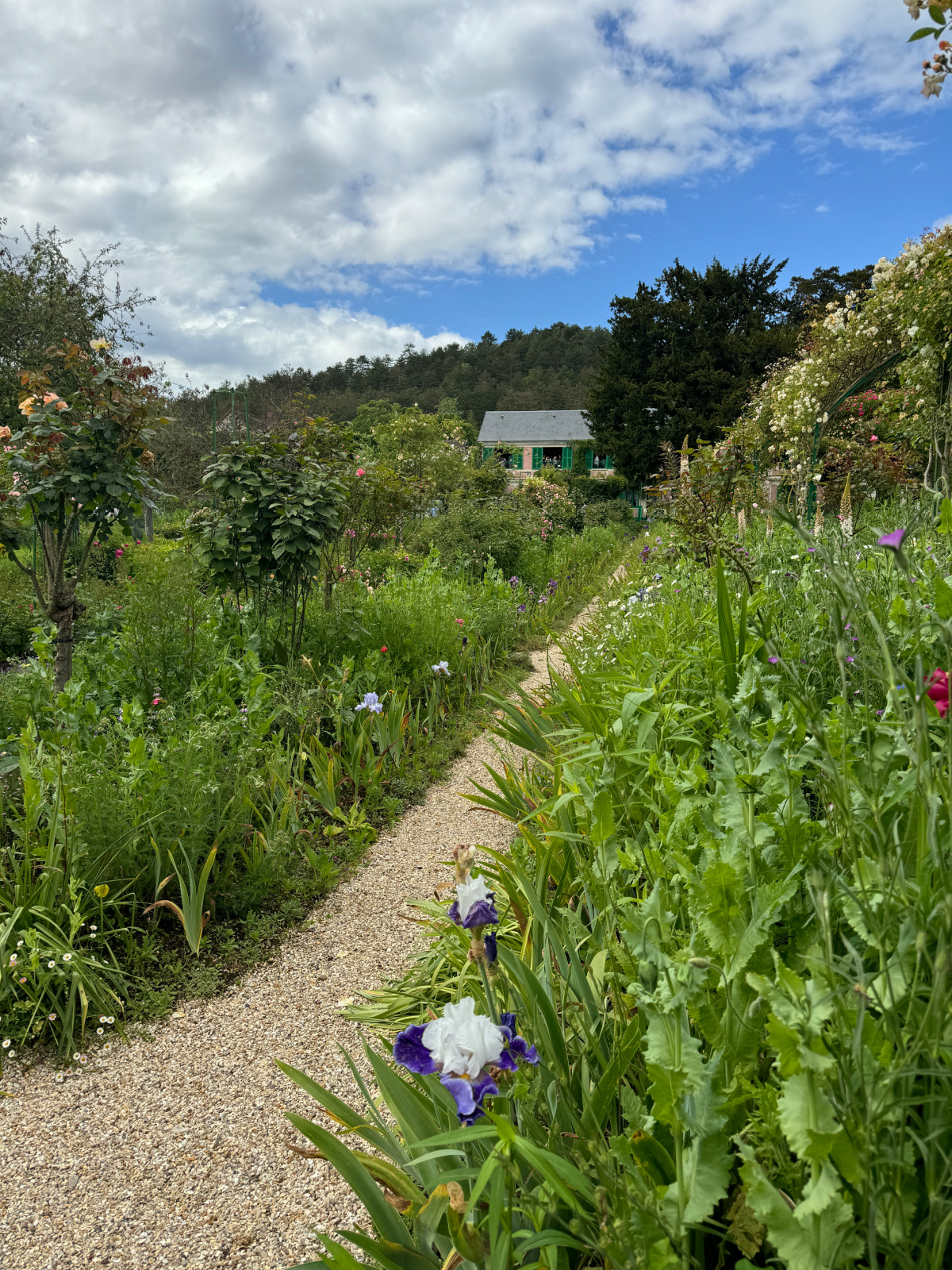
After walking around Maisons Lafitte – and down memory lane – for an hour or so, and then enjoying a spot of lunch, we set off again. This time we were headed for Giverny in Normandy (pictured above), home of Impressionist painter Claude Monet, who lived there from 1883 until his death in 1926. Monet’s house is a charming pink-walled residence with bright green shutters, and a colourful interior that really reflects his creativity. My favourite rooms are the kitchen and dining room, the kitchen decorated in shades of blue with patterned blue tiles and charming gingham curtains and the dining room with its bright yellow walls lined with Japanese prints. The whole house reflects Monet’s love of colour.
We were early in the season so the garden was just coming into its own, but depending on the time of year that you visit, you will see many different kinds of vibrantly-coloured flowers. There are two parts to the garden, the Clos Normande, full of abundant, informal planting and the Water Garden with its serene lily pond and Japanese-style bridge immortalised in Monet’s Water Lilies series. If you enjoy Monet’s work as I do, seeing the ponds full of waterlilies and the Japanese-style bridge that featured heavily in his paintings is really special. However, even if you were unfamiliar with his work it would be hard not to love them.
Top tip – Giverney is very popular and gets extremely crowded, particularly on the weekends, so try to visit on a weekday if you can. Tickets are timed and a limited number of tickets are sold each day so it is wise to book in advance.
After a lovely walk in the gardens to round out the day, we headed off to the Hôtel Les Hauts de Loire in Veuzain-sur-Loire. My favourite hotel of the trip, this former hunting lodge features comfortable accommodation, excellent breakfasts in a beautiful dining room, a Michelin-starred restaurant, a more casual bistro, gorgeous gardens and (when we visited) a fabulous resident cat named Duchess.
Loire Valley Road Trip – Day Three – Châteaux
Château de Chenonceau
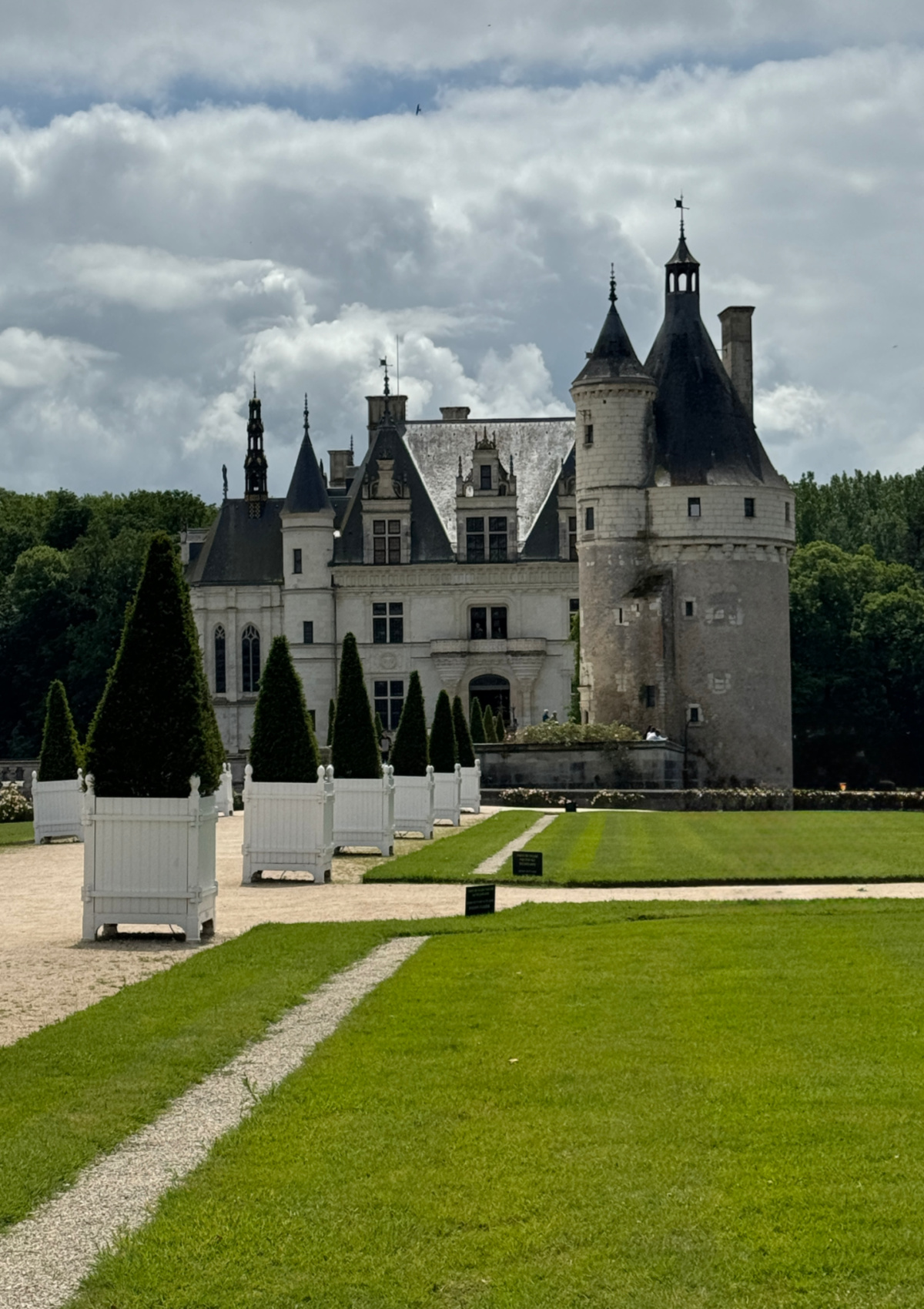
If you could only visit one chateau on your Loire Valley road trip, I recommend the Château de Chenonceau. Often referred to as “The Ladies’ Castle”, it was lived in and shaped eight remarkable women including Diane de Poitiers, mistress of King Henry II and later, his wife Catherine de Medici. Built in the early sixteenth century under the supervision of Katherine Briçonnet, its graceful lines, high ceilings and light-filled rooms are adorned with fine furniture, tapestries and paintings. The Great Hall, spanning the River Cher, features two superb Renaissance fireplaces.
During World War 1 Chenonceau served as a military hospital, and in World War 2 its gallery was a passage between Nazi-occupied territory and free France. The château is beautifully furnished and decorated.
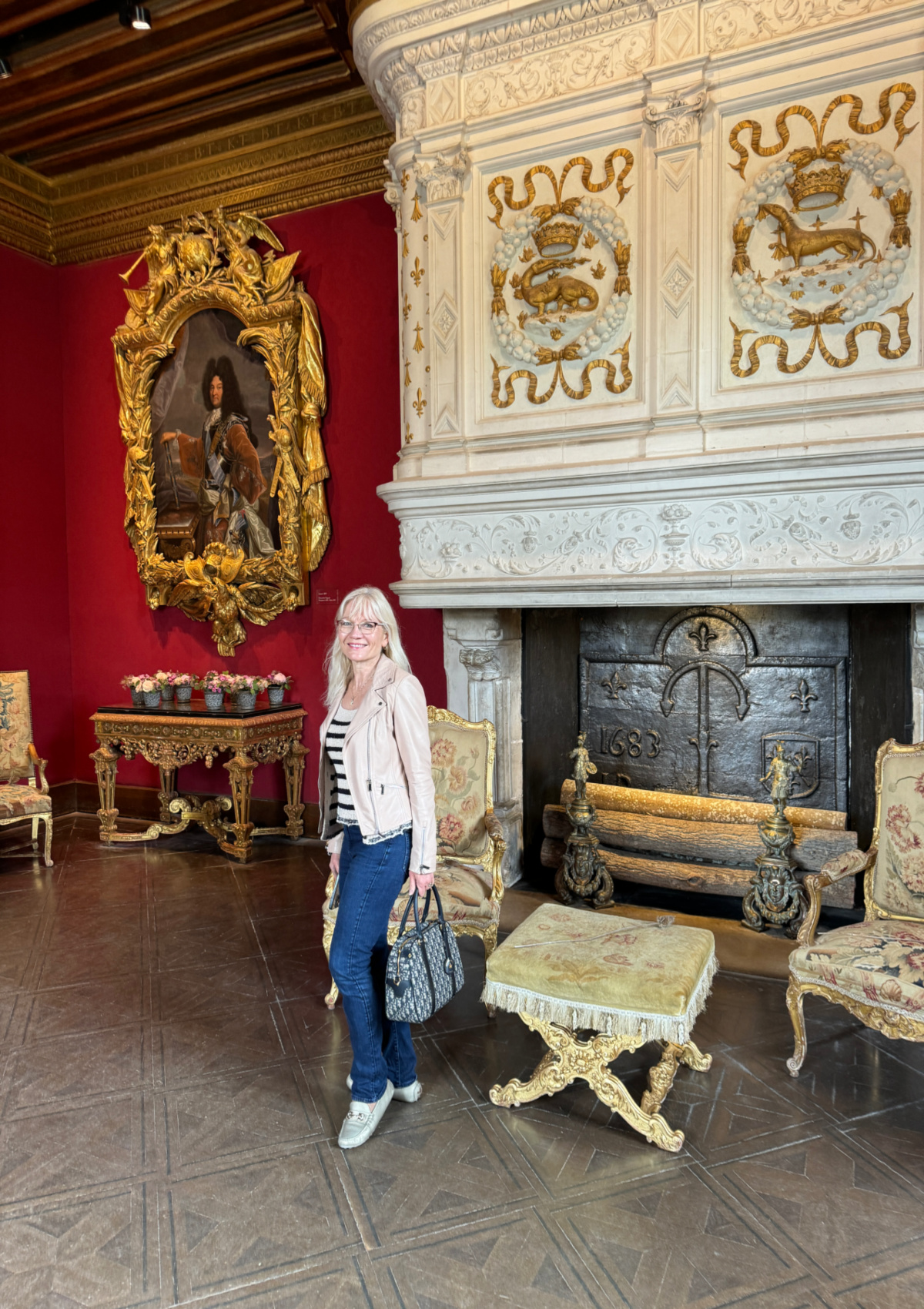
Don’t miss the fascinating kitchens downstairs and be sure to allow time to explore the gardens. Diane de Poitier’s formal terraces, with manicured hedges, fountains and rose-clad walls, beautifully compliment Catherine de Medic’s gardens of boxwood, lavender and climbing roses. In spring and summer the air is filled with the fragrance of flowers – countless roses and over one hundred hibiscus in Diane’s gardens alone.
Loire Valley travel tip – We found the food in the self-service restaurant to be fine but not great, and we found it to be very expensive for what it was. There is another, more formal restaurant on site which I have not tried, and there are large picnic areas if you want to bring your own food.
Château de Villandry
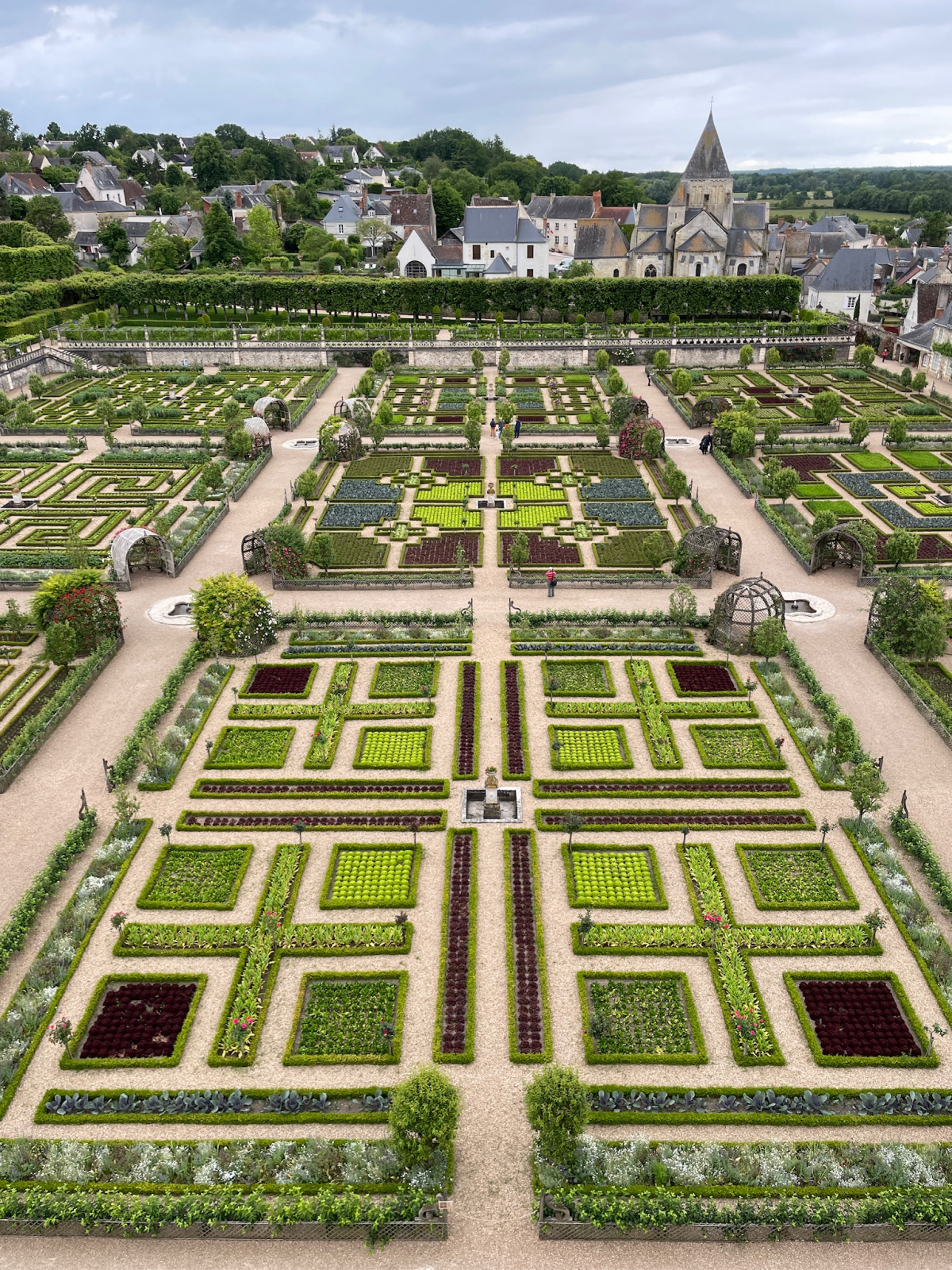
From Chenonceau, we travelled for just under an hour to Château de Villandry, which features a beautiful blend of medieval and Renaissance style and some of the most amazing gardens in the world.
One of the things that really struck me about the Château de Villandry was how lived in it felt. Although you do feel like you are stepping into the 18th and 19th centuries as you walk through the public areas, they are furnished in a warm and welcoming style which makes the property feel less like a monument and more like a home. The Carvallo family, who have owned the property since the early twentieth century, still live in part of the château and are involved in the management of the estate and its gardens.
The light and airy rooms are beautifully furnished with windows looking out on to the spectacular gardens. For an even better view, you can go up to the open air belvedere on the top floor of the building and look from its balconies over the gardens. From here you can see the geometric shapes made of box hedges including hearts and crosses, many of which are filled with flowers. Villandry’s seven gardens, arranged over three terraces, are an absolute masterpiece. There is even a kitchen garden with a patchwork of perfectly arranged vegetable plots.
We really wanted to spend more time here but it was growing late so we returned to Les Hauts de Loire in the early evening and ate at the bistro there. The food was good, but the menu was a bit challenging and it was very expensive.
Loire Valley Road Trip – Day Four – Saumur Wine Tasting and Amboise
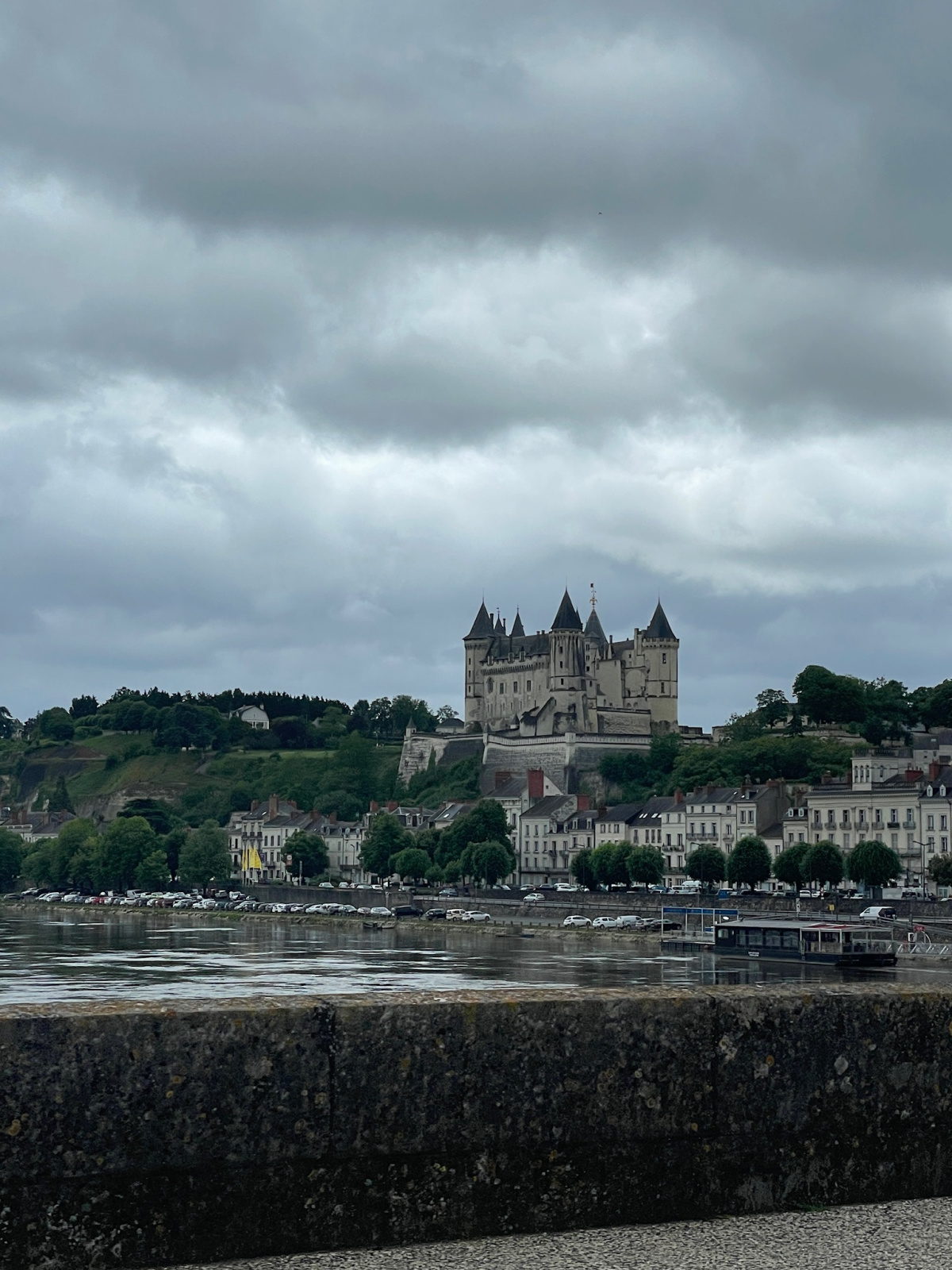
We followed a picturesque drive through the countryside to Saumur, a charming Loire Valley town about 90 minutes from where we were staying. With its fairytale château, pretty riverside walks and a walkable old town full of cafés and shops, Saumur is a lovely place to explore. But our focus that day was underground – on the caves where the town’s famous sparkling wines are made.
Beneath the surface of Saumur lies a network of tunnels carved into soft limestone. Originally quarried to build local towns and surrounding castles, these caves were later found to offer ideal conditions for winemaking. Their cool, constant temperatures and gentle humidity make them perfect for fermenting and ageing wine.
Saumur’s sparkling wines are made using the “Méthode Traditionnelle”, the same method that is used to make Champagne. Only wines actually made in the Champagne region can be called Champagne, but Saumur’s sparkling wines are very special in their own right. For over thirty years, my father-in-law would serve pink sparkling wine from Maison Louis de Grenell on special occasions. We wanted to see where that wine was made.
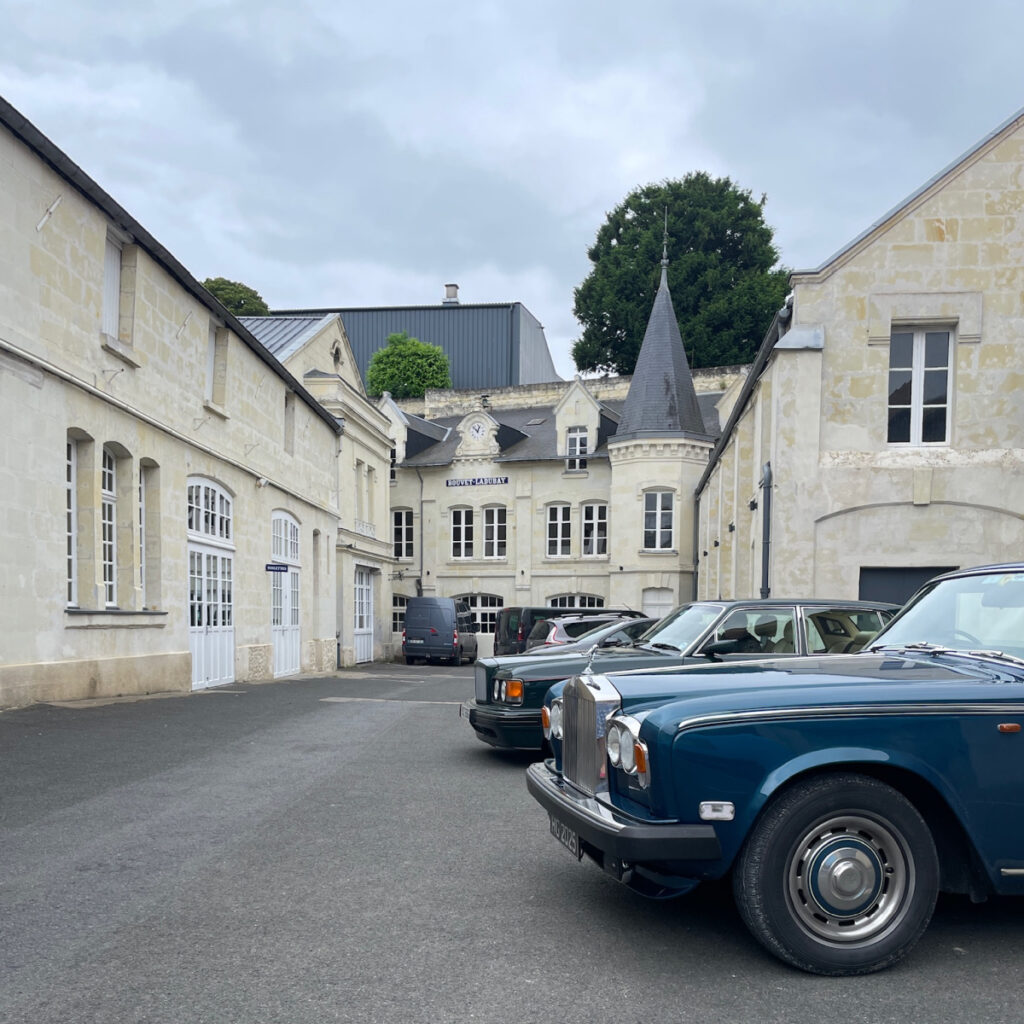
Our son had thoughtfully pre-booked a tour and tasting at both Maisons Louis de Grenell and Bouvet Ladubay. (Loire Valley travel tip – While spontaneous tastings can be fun, pre-booking really is the best way to ensure availability.) Although the tour at the Maisons Louis de Grenell, the preferred winery of my father-in-law, was fine, we actually enjoyed the tour at Bouvet Ladubay more. It went into greater depth about the family legacy and history and it just seemed more interesting on the whole. The tasting at Bouvet Ladubay was a bit more elegant and private as well, and we felt the wines tasted even better. In the end, it was the sparkling wine from Bouvet Ladubay that we purchased instead of the wine from Maison Louis de Grenell, and a new tradition was born.
We stopped in Amboise on our way back to the hotel for a delicious pizza supper at Via Roma. Amboise is a beautiful town, featuring a historic château, a gothic church, and the last home of Leonardo da Vince, the Chateau du Clos Lucé. There are lots of lovely little streets to explore full of shops, restaurants and history.
Loire Valley Road Trip – Day Five – Château de Chambord and Chinon
Guy and I spent the morning relaxing at the hotel while Alexander and Hannah visited a Mini Châteaux Park in Amboise. The park features models of the most famous Loire Valley châteaux at a 1/25 scale, along with a miniature railway. They definitely enjoyed their visit.
After they returned, we all set off towards the Château de Chambord, about 45 minutes away. We stopped at the 1519 Restaurant at Maslives, just outside Chambord, for lunch en route. The restaurant is modern and friendly and the food was delicious.
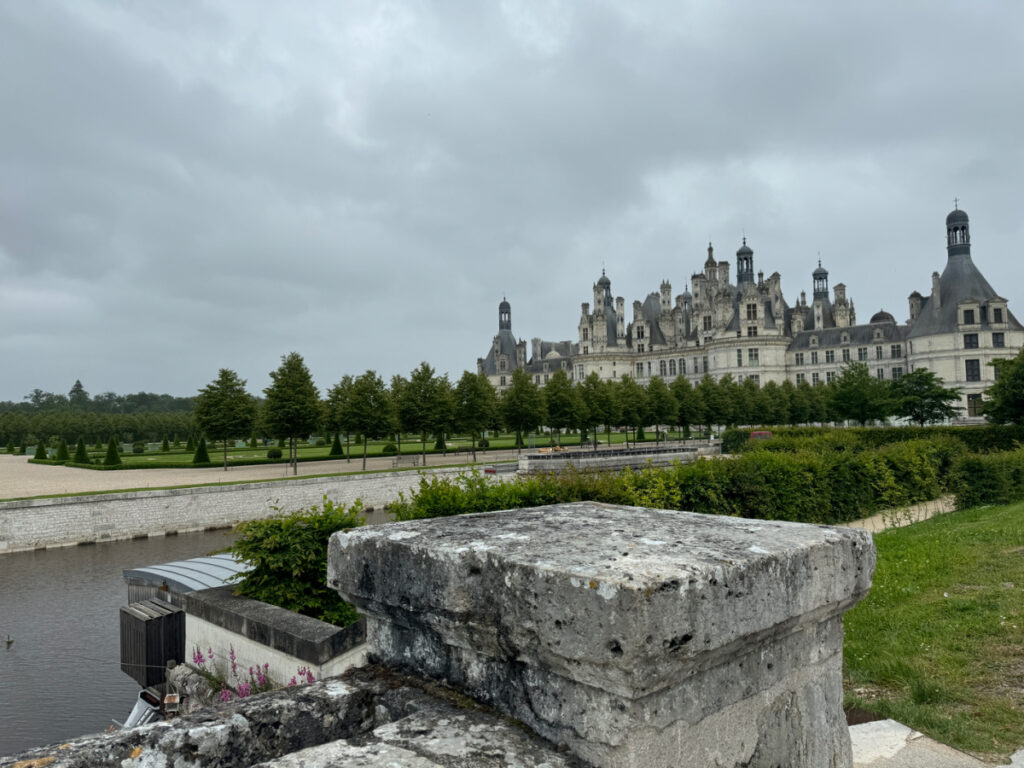
The Château de Chambord is set in a vast estate where you could walk for miles. The castle itself rises out of the landscape as you approach – it is definitely hard to miss! A large tourist village with shops and restaurants has been built beside it as well.
Designed as a hunting lodge in the 1500’s the Château de Chambord was not completed as a formal residence until nearly a century later. The château features a Greek style cross-shaped centre design and there are 84 staircases. The 440 rooms are vast but many are now empty of any furnishings, giving the château a bit of an abandoned, ghostly feel to it.
One of the most extraordinary features of the Château de Chambord is its famous double helix staircase, believed to have been designed by Leonardo da Vinci. The staircase consists of two separate spirals winding around a central core, so if you go up one side while someone else comes down the other, you can see each other through the central opening but you never actually meet. It’s beautiful, but maze-like and almost claustrophobic in places. While it is imposing and very beautiful, Chambord is not my favourite castle.
After leaving Chambord, we drove through the countryside to Chinon, happening upon the Château de la Grille. We were too late for a tour, but were offered a tasting which we all thoroughly enjoyed. We added a few more bottles to our collection of wines to bring home before once again heading back to the hotel via Amboise, where we stopped for dinner at the Bistro l’Amboisie. We all enjoyed our meals and the atmosphere was very convivial.
Loire Valley Road Trip – Day Six – Vouvray and Touraine Wine Tasting
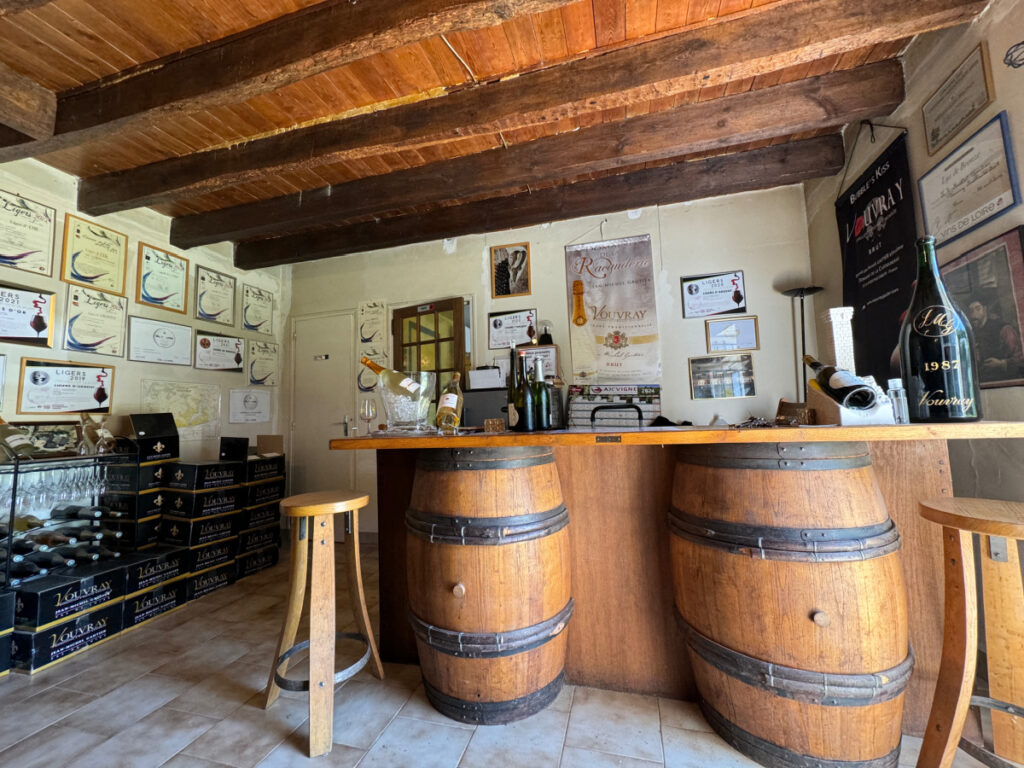
Wines from Vouvray have always been popular with our family, so the plan for day six was to travel the short distance to the town itself. The drive was pretty and only took about 35 minutes. However, Vouvray town centre was much more commercial and modern than I expected and full of what appeared to be very generic tasting rooms. We stopped in one and were disappointed in the experience and the wine as well. So, after buying filled baguettes from a very friendly bakery and having an impromptu picnic in a local park, we drove into the countryside around the town to check out some vineyards and wineries.
Hannah had a recommendation about the wines from Benoit Gautier’s vineyard. We had been advised to make an appointment but when we were unable to reach Benoit we decided to try anway. Despite turning up unannounced, we had a wonderful tasting, although we were unable to tour the caves where the wines are made and aged. We enjoyed the wines so much, we bought a number of bottles between us.
We chose to travel back to the hotel via Touraine where we stumbled on The Domaine de Rabelais owned by Cédric and Marina Chollet. They were very welcoming, despite the fact that yet again we had not made a reservation. We had another really enjoyable impromptu tasting and bought yet more delicious wine.
Loire Valley Road Trip – Day Seven – Heading Home via Cabourg
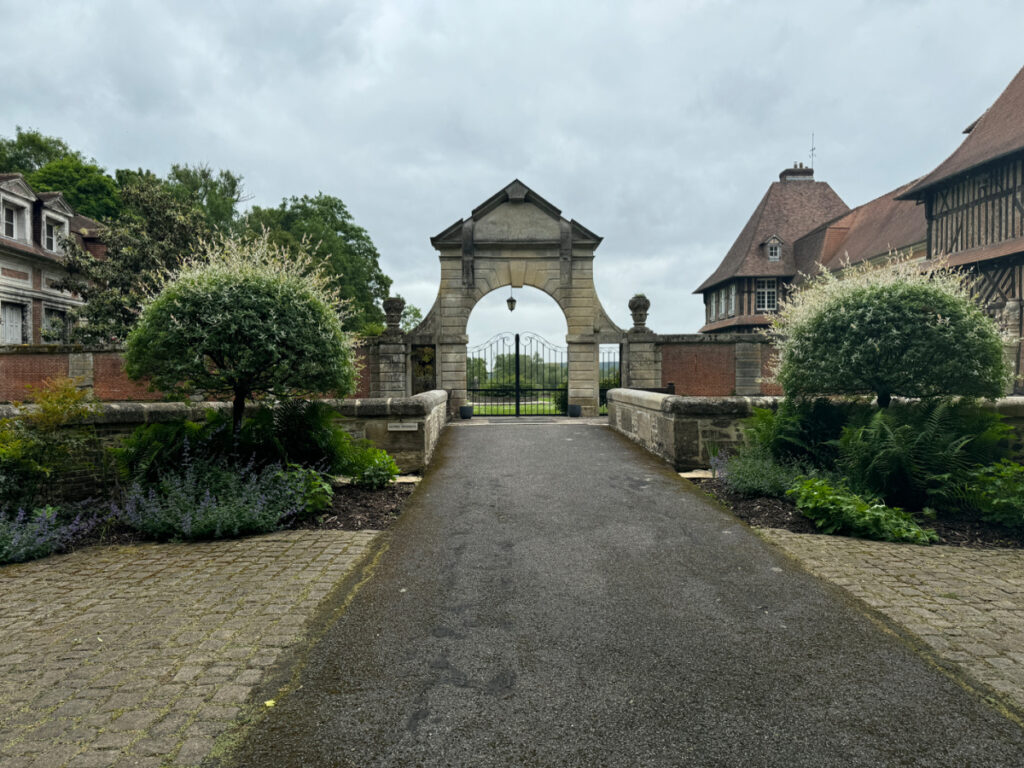
The penultimate day of our Loire Valley Road trip dawned grey and rainy. In another nod to my late in-laws, Alexander had arranged a private tour at La Spiriterie Française at the Château de Breuil in Normandy, where our family’s favourite Calvados is distilled. This stop would make our journey to Cabourg a bit longer, however we were all looking forward to our tour.
The Château de Breuil
In addition to Calvados, rum, whiskey, and liqueurs are also made at the Château de Breuil. Although the distillery has only been in operation since 1954, the site and some of the buildings date back to the seventeenth century. Our guide was very knowledgeable and we thoroughly enjoyed both our tour and the tasting that followed. We purchased a few favourites. Loire Valley travel tip – There is a very generous allowance for the amount of wines and spirits you can bring back into the UK for personal use, however it is important to check for up to date information on the allowances before you travel.
Cabourg
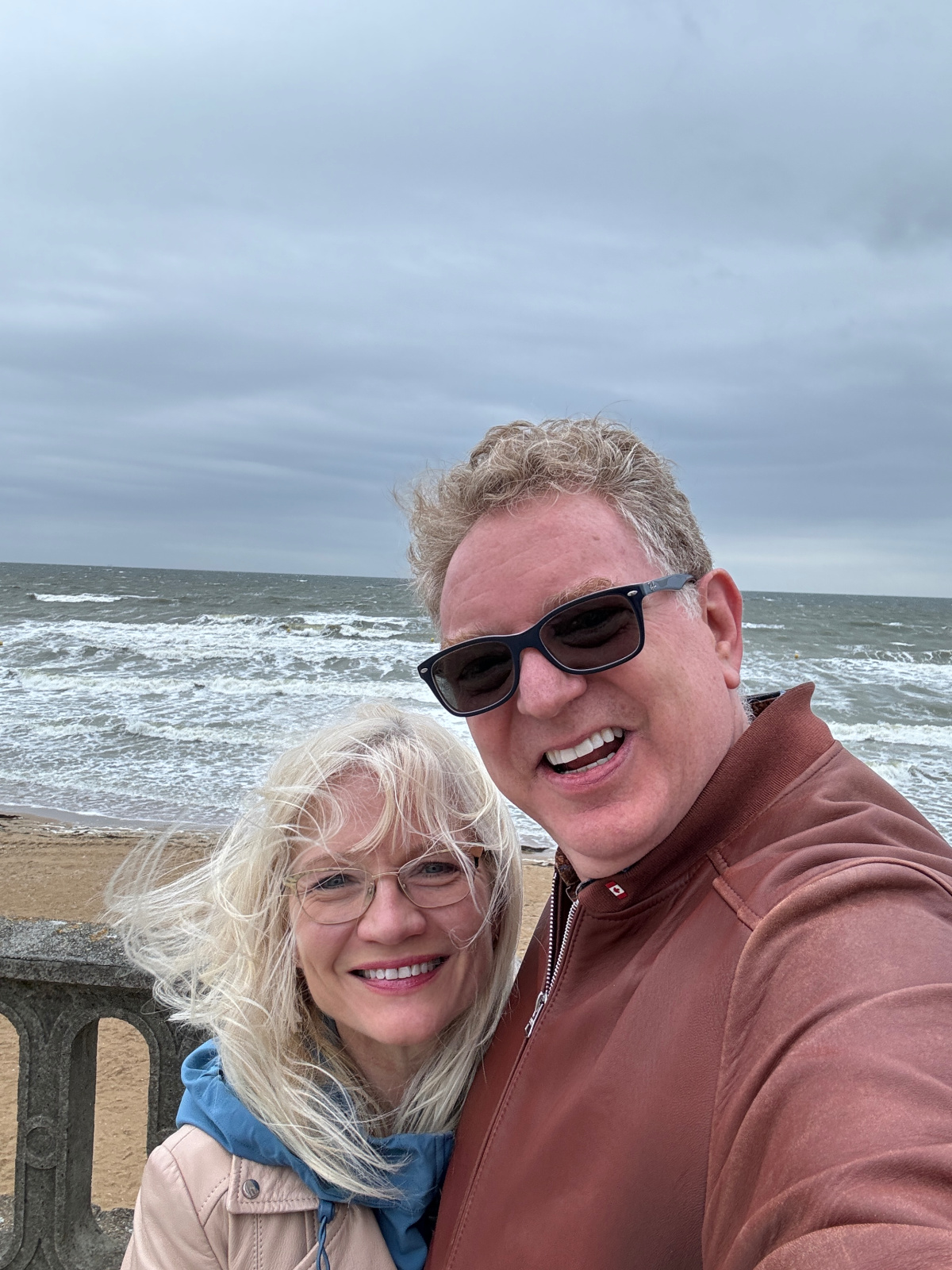
By the time we arrived at Cabourg on the Normandy coast, it was raining and there was a ferocious wind. We checked into The Grand Hotel, where Guy had stayed in with his parents in the late 1970’s when they visited for a vintage car rally in their well-loved Rolls-Royce 20/25. The staff were very friendly and professional, and the furnishings very grand, but on the whole the hotel looked a little bit tired.
After a wet and windy seaside walk we went back to the hotel to dry off and settle in, only to discover that the heating in the bedroom of the suite my husband and I were staying in did not work. The staff gave us an electric space heater, however we were disappointed as we had booked one of the best rooms in the hotel and this was not the standard we were expecting. We found that on the whole The Grand has an aura of faded grandeur about it now, and while it was fun going back down memory lane, we would be unlikely to choose it for our next visit to Cabourg. As we were travelling slightly off season, some of the restaurants and local amenities were closed, so sadly it was our least favourite stop of the trip. I am sure Cabourg is nicer in the sunshine and when more places are open.
Day Eight – Heading Back to the UK
The journey from Cabourg to Calais should take just a little over three hours, but when you are travelling in vintage cars (even very well-maintained ones), you have to allow time just in case, and I am so glad we did. This day was an adventure, involving hi-vis jackets and roadside repairs that meant we only got our Rolls-Royce Silver Shadow II back to the UK thanks to the grace of God, some duct tape, and Alexander’s strength and driving skills.
Guy and I were travelling in the Bentley behind Alexander and Hannah, and about an hour into our journey I saw smoke coming from the back of the Rolls. Luckily we were very near a motorway exit, and we all pulled over to the side of the road and opened the bonnet, only to discover that one of the hoses had split and the power steering fluid was rapidly leaking out of it. Long story short, we managed a bit of a repair with duct tape and Alex drove the Rolls the rest of the way to Calais with no power steering. This is quite a feat, as the car weighs 2235 kg (4,970 pounds) with no luggage or passengers, and even though we took as much of the luggage and wine as we could into the Bentley, the Rolls was far from empty. Much to our relief we made it to the Eurotunnel, but we were nervous as we did not want the Le Shuttle crew to know the car had any issues, as they might not have let us board the train. There are a few tricky corners if you are driving a larger car on to Le Shuttle and without power steering it is very difficult indeed. Thankfully Alexander managed to get the car both on – and off – the train and to get the car as far as the services at Junction 11 on the M20.
Epilogue
It took a few hours for the recovery truck to arrive, but once the car had been collected, the four of us travelled back to our house in the Bentley. The Rolls arrived a few hours later, in the early hours of the morning. The following Monday the car was taken to the company we use for servicing and repairs on another flat-bed truck. It turned out that the new hoses that had been installed in preparation for the trip had come from a batch that was faulty, as we were not the first to have experienced this issue. Once the hoses were replaced (under warranty) all was well. In the end, the car was back with us very quickly, in plenty of time for our summer adventures.
Although it was not the ending to our trip we had hoped for, it was still an amazing Loire Valley road trip, one we are all very keen to repeat just as soon as we can.
Have you ever visited the Loire Valley? I would love to know your favourite things to see and do there! Please share in the comments.
Please note: This post contains my honest opinions and the advice I give to friends. None of our experiences were gifted and we paid all our own expenses. Information is correct to the best of my knowledge at the time of writing. Always visit restaurant and venue websites for opening times, their full terms and conditions, and to check prices, availability and payment terms.

What a lovely trip! My husband and I love road trips and all the places we discover along the way! I’m glad your car issue happened near the end of your trip and that it was resolved quickly! Your photos capture so much beauty!
I’m so glad you enjoyed my article, Laura. Thank you for the compliment on the photos too. It really was a lovely trip! In fact we are working on planning another one next summer, to perhaps include some other European countries as well.
I went on a trip to France in high school and while we started out in Paris we did spend some time in the Loire Valley and Chenonceau was my favorite of all the castles we toured. I’m sorry to hear the trip ended with some minor car trouble but that is impressive he was able to drive so well without the power steering.
I’m so glad you have been to this area too, Joanne! That is a coincidence, I took a similar trip in high school, starting in Paris and then going to the Loire Valley. We stayed in Blois. You and I definitely have a favourite castle in common 🙂