
This post may contain affiliate links. I earn commission if you purchase via affiliate links. As an Amazon Associate, I earn from qualifying purchases. Please see our full Disclosure Policy for details.

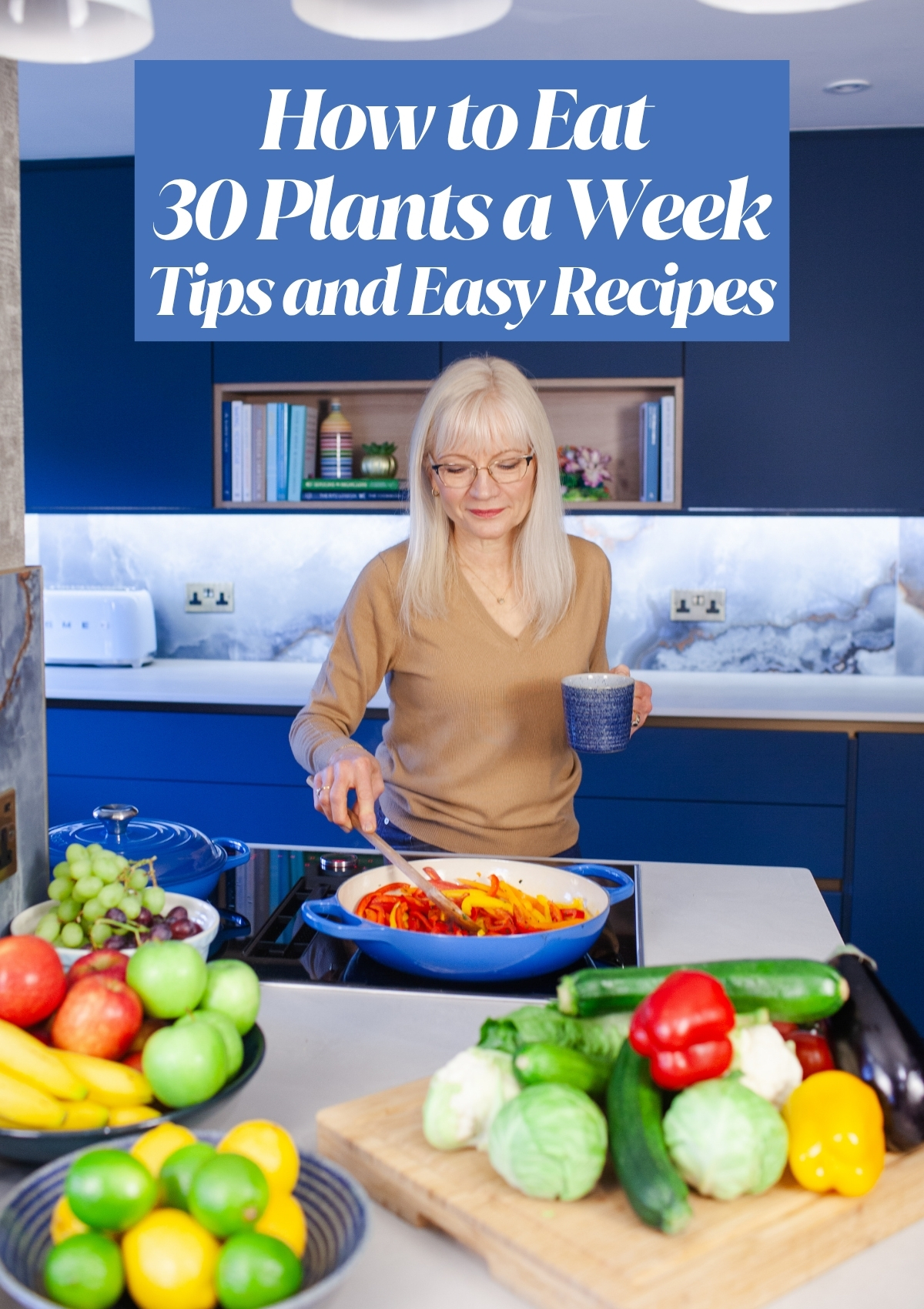
Learn how to eat 30 plants a week – and enjoy it – with my simple everyday strategies, gut-friendly recipes and ideas to make eating well a breeze.
Many people are feeling daunted by the recent advice to eat 30 different plants a week. However I promise it’s easier and even more delicious than you might think. In my experience, it can even be fun.
Eating 30 different plant foods a week is not about being entirely-plant based, it’s about introducing even more variety and choice to your menus. It’s a great way to support your gut health, boost your immune system, and reduce the risk of chronic conditions like heart disease and type 2 diabetes.
I have been having so much fun discovering new to me plant-based foods, as well as re-discovering old favourites. It can be a deliciously refreshing way of updating your meals and make menu planning a whole lot more interesting. The best bit is, I’m not just talking about fruit and vegetables here.
What Does 30 Plants a Week Actually Include?
The short answer to this is ‘more than you might think’! When you are considering how to eat 30 plants a week, keep in mind that all fruits and vegetables count, as do legumes like peas, beans, lentils and chickpeas. Tofu (made from soy beans) counts as a plant too. Herbs and spices are also included, as are nuts and seeds. The best news? Coffee and dark chocolate count too!
The key though is to eat 30 different plants a week. You can only count each item once. So if you eat two apples, it only counts as one of your 30 plants a week. It may be easier to think of each different plant as having a ‘plant point’ (a term coined by Dr Megan Rossi, PhD RD) and try to collect 30 of them over the course of seven days.
The only proviso is herbs and spices. Because they are seasonings and we do not generally eat a lot of any one particular herb or spice, each one counts as a quarter of a plant point. So if you use basil, oregano, thyme and pepper in a recipe, that is one plant point for all four (not four individual points). Most autumn desserts contain cinnamon, ginger, nutmeg or cloves, so do not forget to count those as well. I feel I have to whisper the plant point in pumpkin desserts to you here too – not that I’m encouraging you to eat dessert, but it is worth mentioning!
How to Track 30 Plants a Week
There are lots of easy ways to track your progress.
- Keep a list of the plant foods you eat – you could give yourself a healthy reward if you manage to get to 30 different varieties. Or challenge family or friends to see who gets to 30 different plants first.
- You could record the plants you eat using these free printable tracking sheets.
- Make a game of eating as many colours of vegetables as possible. “How many colours can I/we eat today?” Kids could colour in a rainbow picture for the day or the week to show how they are ‘eating the rainbow’.
- Introduce one new plant per week. Grocery stores and markets offer so much variety, you are bound to find something you have never tasted before. And if you have little ones, why not get them involved in helping to choose a new plant for each week? Children are much more likely to try things if they have had a role in choosing or preparing them.
Eating 30 plants per week is about giving your body the variety and nutrition it loves while exploring some new flavours. This is the perfect opportunity to have some fun with your food, so don’t stress about it or make it a chore.

How To Make Eating 30 Plants a Week Easier
- Roast some veggies, cool and store in the fridge to have on hand for the week. There are so many different ways to use them! Check out just a few ideas by clicking here.
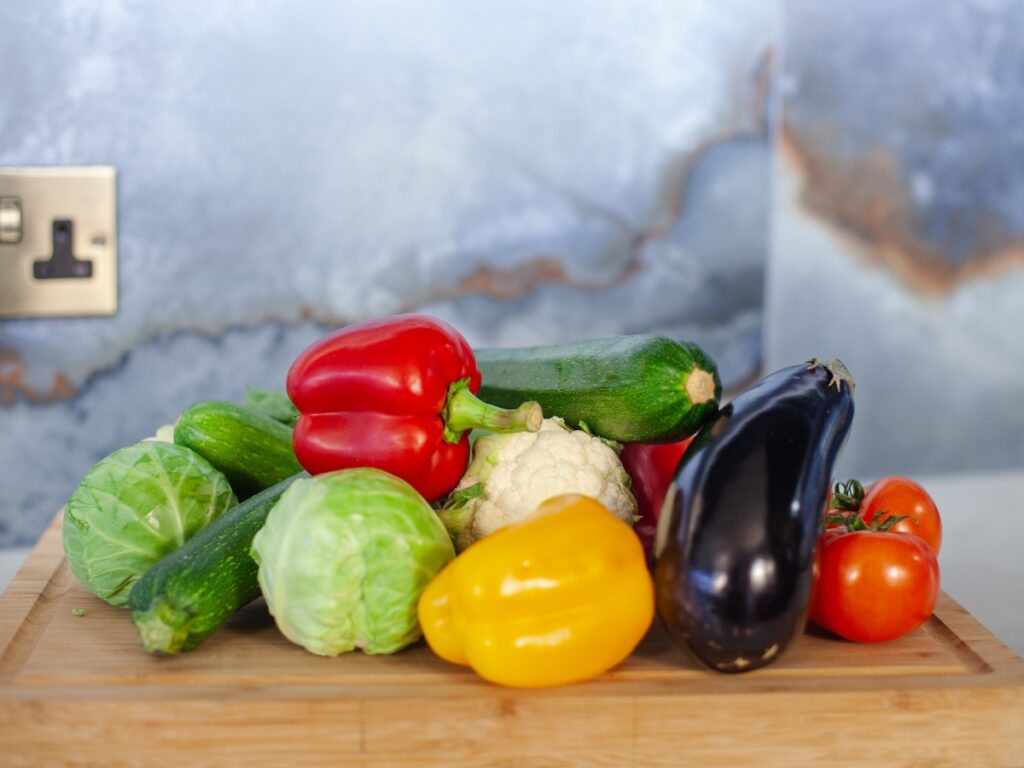
- Enjoy my delicious collection of Easy Vegetarian Recipes – which makes eating 30 plants a week a breeze! I’m making one of them –Ratatouille – in the photograph above. It contains onion, tomato, aubergine (eggplant), courgettes (zucchini), red and yellow peppers and spices. That’s at least six plant points right there!
- Use herbs and spices liberally. This can help you cut down on salt as well.
- Prepare raw vegetables ready for snacking and keep them in the fridge. Carrot and celery sticks and sliced colourful peppers work really well.
- Encourage yourself and your family to eat fruit by keeping a well-stocked bowl of washed, ready to eat fruit on the kitchen counter or sideboard. Refrigerate it overnight for freshness, and just put it on the side each morning. (It is best to avoid refrigerating bananas.)
- Don’t forget about frozen vegetables. Many of them contain even more nutrients than the fresh varieties as they are frozen as soon as they are picked (and not put in storage waiting to be transported to the grocery store or market). Frozen fruit works well in smoothies too.
- Experiment with different whole grains. Barley, couscous, freekeh, oats, buckwheat, spelt and bran are only a few of the whole grains that are normally easily available these days.
- If you love meat or fish, try recipes that include lots of vegetables too, like my Pork Tenderloin with Lentils and Mediterranean Vegetables, my Healthier Sweet and Sour Chicken or my Baked Cod with a Sautéed Veggie Topping. (You can use any firm white fish if cod is not available.)
More Recipes and Easy Ways to Hit Thirty Plants a Week
Here are some more of my favourite recipes to help make eating 30 plants a week even easier:

30 Plants a Week Breakfast Ideas
Pear Walnut and Ginger Oatmeal
Cranberry Orange Baked Oatmeal
Baked Overnight Oatmeal with Rhubarb and Almonds

30 Plants a Week Lunch Ideas
Quick and Easy Chicken Noodle Soup

30 Plants a Week Main Dish Recipes
Wild Rice Salad with Sausages and Apple
Cod and Chickpeas in a Mediterranean Ragu
You can browse the Recipe Index here on the site for even more ideas or use the search bar if you are looking for something in particular.
A Delicious Case For Variety
I love how the premise of eating 30 plants a week focuses on abundance as well as how it encourages variety over restriction. After all, eating well is about feeding your body nutrient-dense food that tastes great. Even small changes – a new-to-you plant or grain here, making a healthy recipe instead of ordering a takeaway there – can really help improve your gut-health and energy levels. While the idea of eating 30 plants a week might sound challenging it first, my ideas and recipes can make it easy. Before long you will be hitting that 30 plant a week goal without even thinking about it – and your body will thank you!
Need Some More Inspiration?
Check out my flexible, 3-day Vegetarian Meal Plan!


I can’t wait to explore these recipes, April! I love trying new recipes, and especially vegetable recipes. 30 plants seems easy this way. 🙂 Pinning this to save and share as well. Thank you!
Thank you, Jennifer – and thank you for pinning and sharing as well! I appreciate it! 🙂
These are some of my favourite recipes I highly recommend them 🙂
Thank you, Guy – I appreciate you being my number one taste tester when I’m working on new recipes ❤️
Excellent post, April. I agree that increasing variety in our diets is an admirable goal. Your advice is well considered. Thank you.
Thank you so much, Beth! I really appreciate your kind comment!
Hi April
We are trying to make our diet Mediterranean style these days, and so we are eating many vegetables. I make a lot of soups and also stir-fries as they both incorporate a lot of vegetables. Your recipe links all sound very good–I’m pinning this post for future reference when I need inspiration–thanks!
Thank you so much for pinning this post and for your lovely comment, Pat. Your recipes always look so delicious too!
Great article April, I hadn’t heard about eating 30 plants a week. I love fruits and vegetables as well as beans and lentils and enjoy using a variety of herbs and spices in my cooking. And I have a coffee problem. I love it! Lol. I’ve got to come back and browse these recipe’s soon.
I think I have a coffee problem too, Paula 😂. And thank you! I’m really glad you enjoyed the article. It sounds like you may already be eating 30 plants a week!
Also Pinned 📌
Thank you so much, Paula! That is very kind of you!
Thank you for these recipes April, I can’t wait to try them out. I read an article months ago about eating 30plants a week, you’ve taking the hard work out of this for me 😉
I’m so glad you like the sound of the recipes, Audrey! Thank you! 🙂
Love your ideas in the post “How to Eat 30+ Plants a Week.” I just started to use frozen veggies more often in my cooking. It saves so much time and energy and is healthy too. This post and pictures make fruit and veggies look so beautiful that it does motivate me to eat more of the rainbow. Nancy Andres @ Colors 4 Health.
I’m so glad you found it inspiring, Nancy! Thank you so much for your kind comment! I agree, using frozen veggies really can save time and energy whilst still being very healthy.